How to Winterize Your Lawn in Colorado (Step by Step)
To winterize a Colorado lawn, keep mowing at about 2½ to 3 inches until the grass stops growing, clear fallen leaves, feed the lawn with a fall fertilizer, and water during dry spells all winter.
CSU Extension’s PlantTalk program calls fall the best time to fertilize Colorado bluegrass lawns. Do the work in October and November, while the grass is still green.
Colorado winters are tough on turf. Dry air, wind, and freeze-thaw swings can leave a lawn thin and patchy by March. A little effort in fall makes a big difference in how fast it greens up in spring.
This guide walks through how to winterize your lawn one step at a time.
When should I winterize my lawn in Colorado?
Start in early fall and wrap up before the ground freezes. For most Front Range lawns, that means October through mid-November.
CSU Extension’s Arapahoe County office says that if you fertilize only once a year, October to November is best, while the grass is still green.
colostate
Here’s a simple timeline:
| When | What to do |
| Early to mid-October | Keep mowing, aerate if needed, and clear leaves |
| Mid-October to November | Apply fall fertilizer, water it in, and mulch beds |
| After the last mow | Put the mower away and plan to water in dry weather |
| All winter | Water during dry, mild stretches when the soil isn’t frozen |
Step 1: Keep mowing until the grass stops growing
Don’t put the mower away early. Cool-season grasses like Kentucky bluegrass keep growing as long as the weather allows.
Regular mowing keeps the lawn healthy and prevents a long, matted canopy from heading into winter.
The last mow of the season is simply the last time the grass needs cutting, usually when growth stops after repeated hard frosts.
Step 2: How short should I cut grass for the last mow?
Keep it at your normal height. CSU Extension recommends mowing at 2½ to 3 inches all year, with no need to go shorter in fall. Cutting too low can stress the grass heading into winter.
Two rules to remember:
- Never remove more than one-third of the blade in a single mowing
- Keep your mower blades sharp for a clean cut
Step 3: Clear the leaves
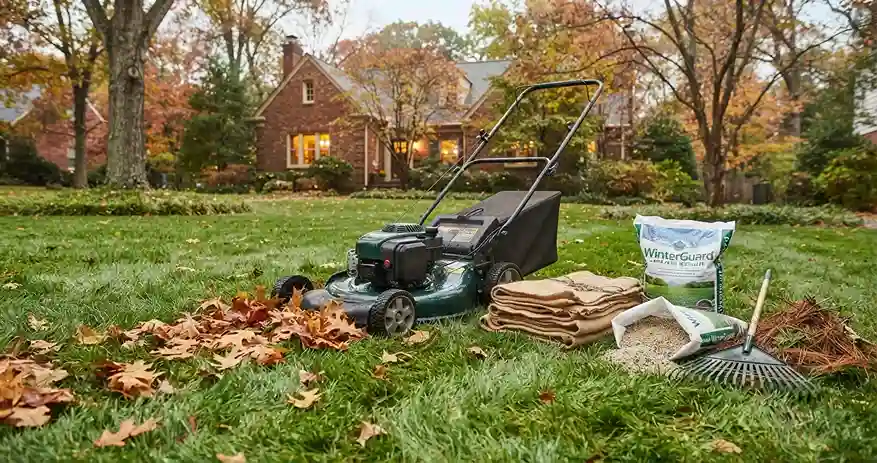
A thick layer of leaves can smother grass and trap moisture. Rake them up, or mow over a light layer so the pieces break down into smaller bits if leaves pile up too deep for a mower to handle, bag or rake them.
If you’d rather not do it yourself, a crew can handle the cleanup in one visit.
Step 4: Should I fertilize my lawn in late fall?
Yes. Fall fertilizing is one of the most useful things you can do for a Colorado lawn. The benefits include a healthier root system and grass that greens up earlier in spring without a flush of excess top growth.
A few tips:
- Choose a fall or winterizer fertilizer made for cool-season grass
- Follow the label rate, or use a soil test to guide you
- Water it in after applying
- Apply it while the grass is still green and before the ground freezes
Drought years add one twist. CSU Extension says fall fertilizer can still help if it’s applied and watered in before the watering cutoff, with most of the benefit showing up in spring. If your area has watering restrictions, plan your timing around them.
Step 5: Aerate if the soil is compacted
Compacted soil keeps water, air, and nutrients from reaching the roots. Fall is a good time to loosen it, since cool-season lawns recover well.
CSU Extension guidance passed along by a local publication lists fall as the time to aerate and fertilize a bluegrass lawn.
castlepinesconnection
A simple test: push a screwdriver into the soil. If it’s hard to push in, the soil may be compacted. Heavily used lawns and clay soils usually benefit most.
Step 6: Keep watering through winter
Many people stop watering when the sprinklers are blown out, but Colorado’s dry winters can dry out a lawn fast.
CSU Extension suggests watering in winter and early spring when there’s little or no precipitation, especially on south- and west-facing areas and exposed slopes.
It also helps with pests. CSU’s PlantTalk program notes that fall watering is essential for lawns damaged by winter mites, since it discourages mite activity.
For winter watering:
- Water only when the soil isn’t frozen
- Pick a mild afternoon so water can soak in before nightfall
- Use a hose and sprinkler, since your in-ground system will be winterized
- Disconnect and drain your hose after each use
If you haven’t blown out your irrigation lines yet, our guide on [when to blow out sprinklers in Colorado] covers the timing.
Step 7: Mulch your garden beds
While you’re prepping the lawn, don’t forget the beds. A layer of mulch helps protect roots from temperature swings and holds in moisture. CSU guidance suggests mulching perennial flower beds in late October.
Winterizing takes a few weekends if you’re doing everything yourself. At Power Services, we help property owners handle fall prep, including leaf cleanup, mulching, and fertilization, so the work gets done before the snow arrives.
If you’d like a hand, you can request a free estimate or learn more about our lawn aeration and fertilization work. Our lawn care and mowing service covers the regular cutting that keeps your lawn healthy through the season. You can also read more about our work as a lawn care company in the Denver metro.
Frequently Asked Questions
When should I winterize my lawn in Colorado?
Most lawns should be winterized from October through mid-November, while the grass is still green. That’s when you keep mowing, clear leaves, aerate if needed, and apply fall fertilizer. Finish before the ground freezes.
Should I fertilize my lawn in late fall?
Yes. CSU Extension calls fall the best time to fertilize Colorado bluegrass lawns because it builds roots and helps the grass green up earlier in spring. Use a fall or winterizer fertilizer, follow the label, and water it in.
How short should I cut grass for the last mow?
Keep it at your normal height of about 2½ to 3 inches. CSU Extension says there’s no need to mow shorter in fall. Cutting too low can stress the lawn going into winter