
What to Include in a Landscaping Contract
What should be in a landscaping contract? Include the project scope, materials, costs, timeline, warranties, and payment terms. Powers Services LLC explains what homeowners should check.
A good landscaping contract should spell out the scope of work, materials, timeline, price and payment schedule, warranty, insurance, cleanup, and how changes get handled. Get it in writing and signed by both sides before any work or deposit changes hands.
A handshake and a quick text can feel fine for a small yard job. But once you’re planting trees, installing sod, or building a patio, a written contract protects both you and the landscaper. It keeps everyone working from the same plan.
Below is a practical checklist of what should be in a landscaping contract, plus a sample scope-of-work excerpt and a few Colorado-specific things to check.
Not legal advice. This article is general information only and isn’t a substitute for advice from a licensed attorney. Contract and licensing rules vary by city and county, and laws change.
Check the requirements that apply to your property and project in Colorado, and consider having a lawyer review any large agreement before you sign.
Do I need a written contract for landscaping work?
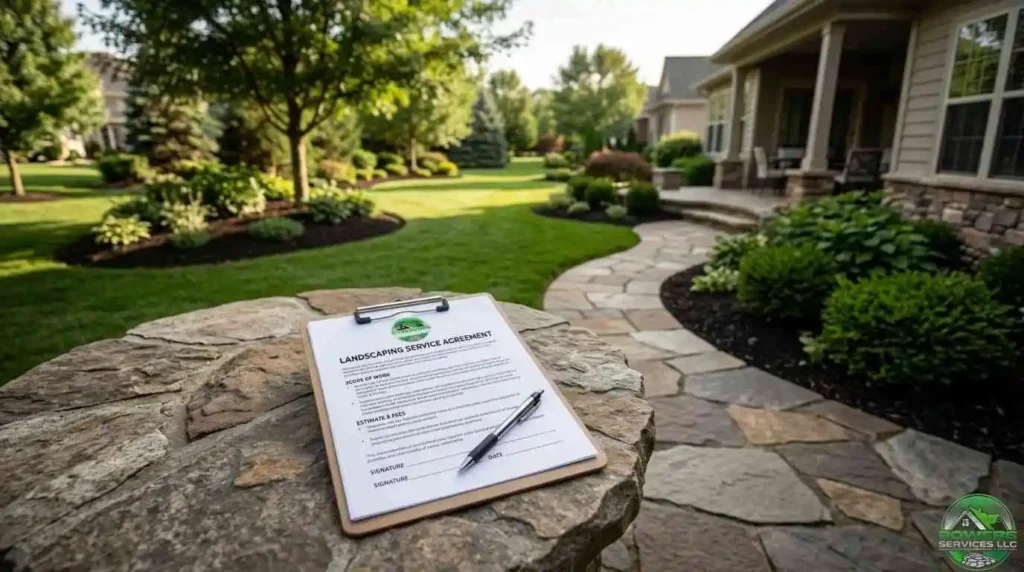
For anything beyond a simple one-time job, yes. A written contract gives you something to point to if there’s a disagreement over what was promised, what it costs, or when it’s due.
Colorado doesn’t appear to have one statute that spells out exactly what a landscaping contract must say.
One legal resource notes that the state has no specific statutory requirements for construction contracts, though contracts should generally include a price, schedule, and scope of work.
A written agreement also matters for payment rights. Under Colorado’s mechanics’ lien statute, a contract worth more than $500 must be in writing to be eligible for lien rights.
That rule is mainly about a contractor’s ability to file a lien, but it shows why putting things in writing is standard practice. Confirm how it applies to your situation
What should a landscaping contract include?

Here’s a quick checklist you can use when comparing agreements.
| Contract item | What to look for |
| Parties and contact info | Full business name, your name, property address, and phone and email for both sides |
| Scope of work | A specific, itemized list of what will be done (see the sample below) |
| Materials list | Plant types and sizes, mulch, sod, stone, and other materials, with quantities |
| Timeline | Start date, estimated finish date, and what happens if weather causes delays |
| Price and payment schedule | Total price, deposit, milestone payments, and final payment terms |
| Change orders | How changes to the plan are requested, priced, and approved in writing |
| Warranty | What’s covered, for how long, and what you need to do to keep it valid |
| Insurance and licensing | Proof of liability insurance and any local license or registration |
| Permits | Who pulls them and who pays |
| Cleanup and debris | What gets hauled away and what the condition of the site will be at the end |
| Lien waivers | Documents showing the contractor and suppliers have been paid |
| Termination terms | How either side can end the agreement and what happens to payments |
How should payments be structured?
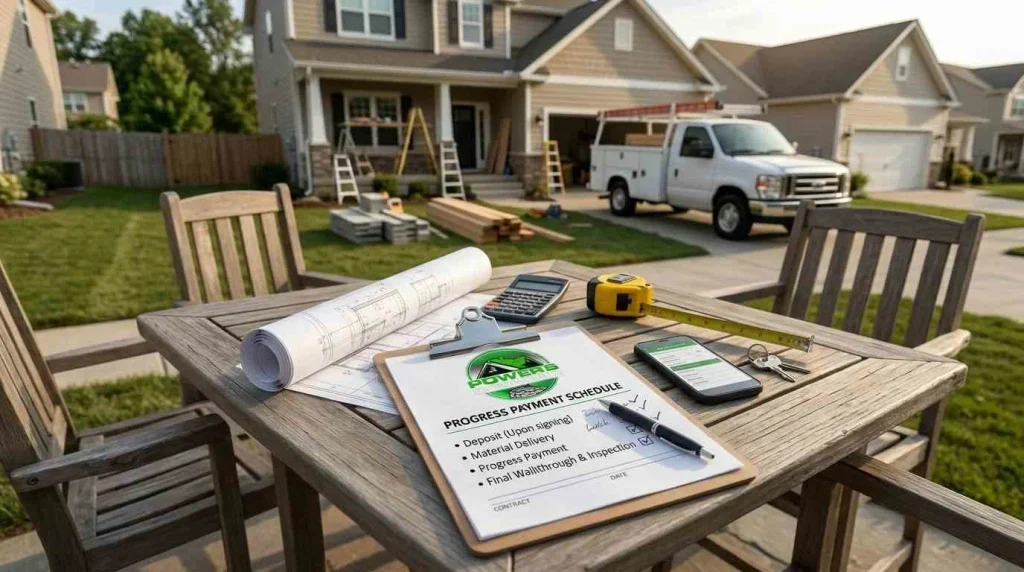
A payment schedule tied to progress keeps things fair. Instead of paying everything up front, many homeowners agree to a small deposit, payments at set milestones, and a final payment after the work is done and inspected.
For example:
- A deposit when the contract is signed
- A payment when materials are delivered, or the main installation is complete
- A final payment after you’ve walked the site and confirmed the work matches the contract
Be cautious about large upfront payments. Ask what the deposit covers, and make sure each payment lines up with specific work or deliveries.
What is a change order in landscaping?
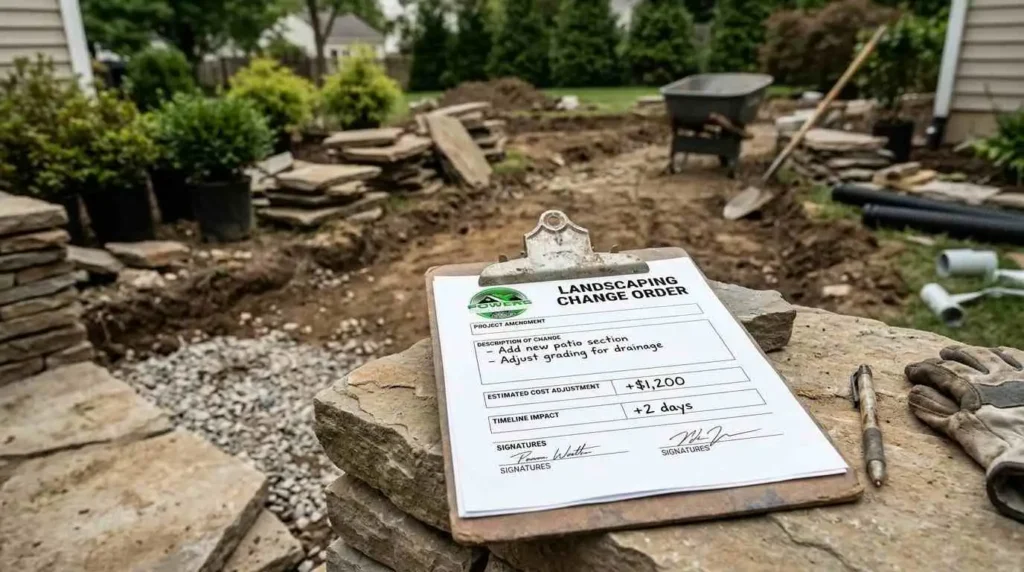
A change order is a written amendment to the original contract when the plan changes. It might be a different plant, an added patio section, or a drainage issue found once digging begins.
A good change order includes:
- A description of the change
- The cost added or removed
- The effect on the timeline
- Signatures from both you and the contractor
Without change orders, it’s easy to end up with a bill that doesn’t match your expectations. Verbal “sure, we can add that” agreements are where most price disputes start.
What should a landscaping warranty cover?
Landscaping warranties vary a lot, so read this section closely. Ask:
- What’s covered: plants, sod, hardscape, irrigation, or labor?
- How long does each warranty last?
- What does the homeowner need to do, such as follow a watering schedule?
- What’s excluded, like damage from severe weather or neglect?
- What happens if a plant dies: replacement, refund, or credit?
Plants are living things, so warranties often come with conditions. Get those conditions in writing so there’s no confusion later.
What about insurance, licensing, and permits?
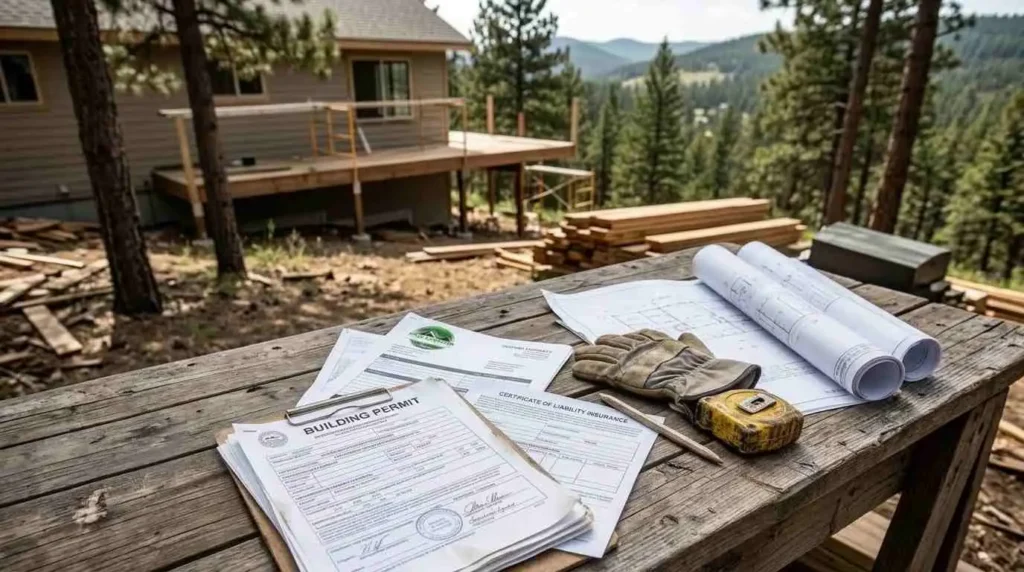
Ask for proof of insurance, and confirm the contractor’s local license or registration, if your city or county requires one.
Colorado doesn’t have a statewide contractor license, so licensing is handled at the city or county level. Requirements differ by location, so check with your local building or licensing office.
If your project needs a permit, such as for retaining walls, decks, or certain grading work, the contract should say who applies for it and who pays the fee.
What are lien waivers, and why do they matter?
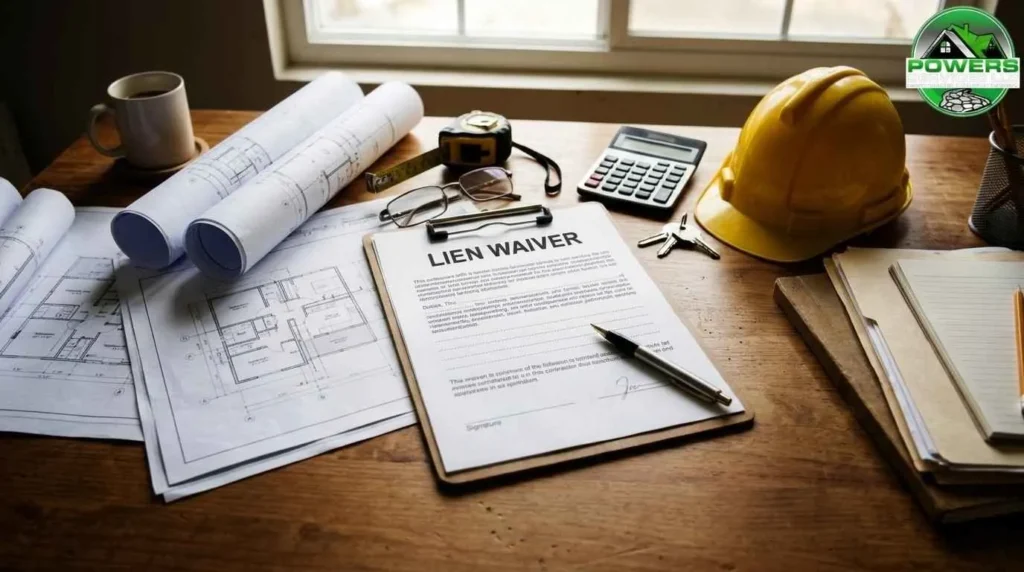
A lien waiver is a document in which a contractor or supplier confirms they’ve been paid and gives up their right to file a lien for that amount.
It helps protect you from a situation where you pay your contractor, but a supplier or subcontractor isn’t paid and files a claim against your property.
A few Colorado notes to verify before you sign anything:
- Colorado’s mechanics’ lien law treats “no-lien” clauses as void and unenforceable.
- levelset
- A written notice of intent to file a lien must be served at least 10 days before a lien statement is filed.
Lien law is technical, so ask a Colorado attorney or the relevant state or local agency how it applies to your project.
Cleanup and debris: a small detail that’s easy to miss
Include a line about cleanup. It should say what gets hauled away (old sod, rocks, branches, packaging), how often the site is tidied during the work, and what condition the yard should be in at the end. Without it, you may end up with piles of leftover material.
Red flags in a landscaping contract
Watch for:
- A vague scope like “landscaping as discussed”
- No start or end dates
- A large deposit with no milestones
- No mention of change orders
- A warranty that’s verbal only
- Reluctance to show proof of insurance
- Pressure to sign right away
How Powers Services approaches project agreements
At Powers Services, project agreements spell out the scope, materials, timeline, and payment steps so you know what to expect.
For larger installs, plans like custom landscape design are discussed up front so the contract reflects the actual design.
If you have questions about how a project would be put in writing, you can talk to Powers Services.
You can also read about our landscaping and installation work or learn more about Powers Services LLC on our homepage.
Frequently Asked Questions
Do I need a written contract for landscaping work?
For any project beyond a simple one-time job, you should have one. A written contract spells out the scope, price, and timeline, and gives both sides something to refer to if there’s a disagreement. In Colorado
What should a landscaping contract include?
At a minimum, it should include the scope of work, materials, timeline, price and payment schedule, change-order process, warranty, insurance, cleanup, and signatures from both parties. For larger jobs, add permits, lien waivers, and termination terms.
What is a change order in landscaping?
A change order is a written amendment that records any change to the original plan, including the added or reduced cost and the effect on the schedule. Both you and the contractor should sign it before the extra work begins.